Plain-language guide
In plain terms, what does it mean to lip sync?
This page explains lip-sync concepts. The linked Vidione home page offers paid talking-avatar generation from a script, person portrait, and voice; enter those on Vidione after signing in. It does not promise source-video dubbing, singing videos, or reference-motion control. Browser timeline editing does not require a subscription, but AI generation does.
If you ask what does it mean to lip sync, the short answer is to move your mouth in time with words or sounds heard from another source. The voice may be prerecorded, performed by someone else, or added to a video later.
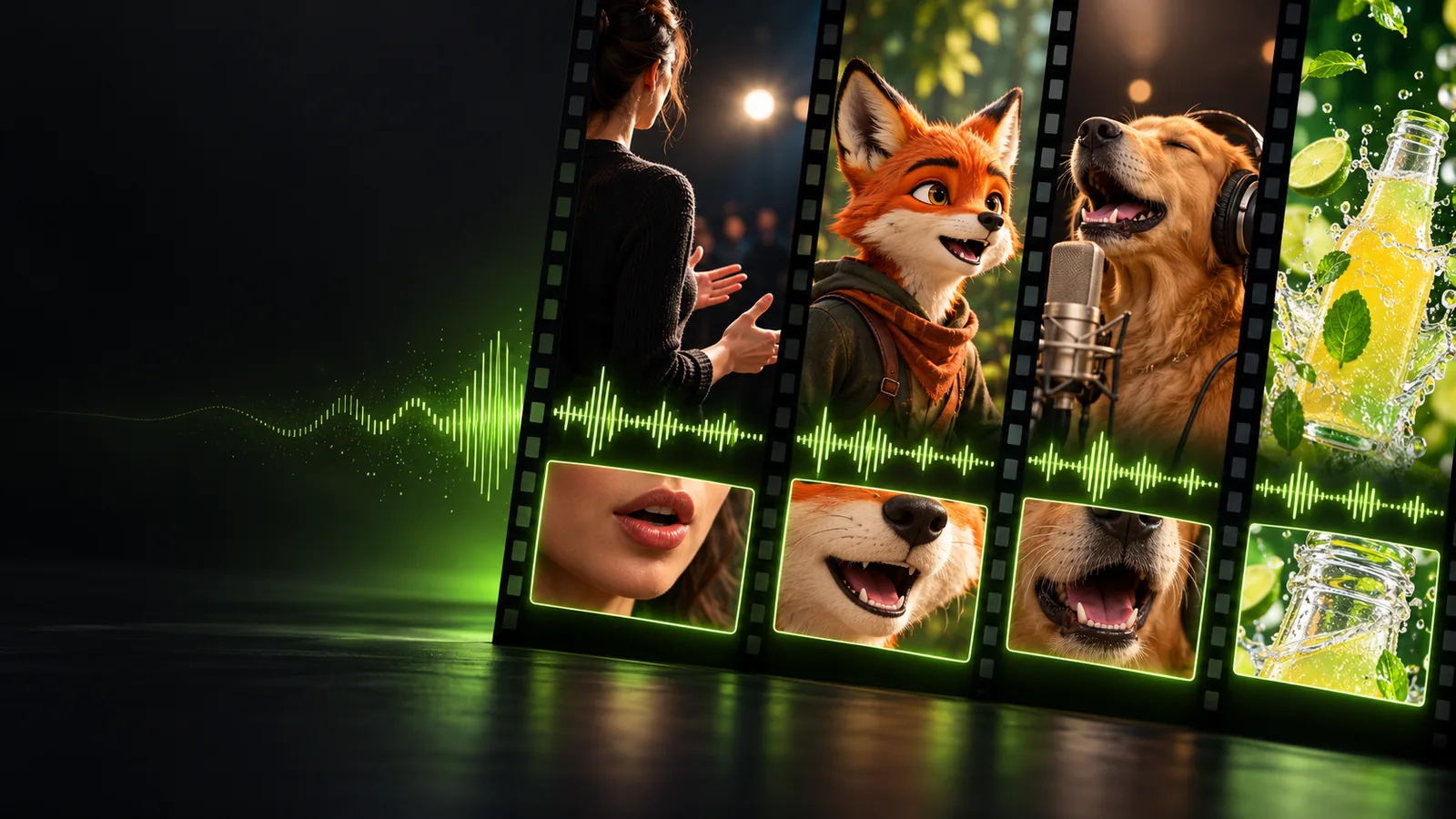
A one-line definition
To lip sync is to match visible mouth movements to audio so a performance appears to speak or sing in time. The term describes the match, not who originally made the sound.
How it works
Whether someone performs for a camera or adjusts footage afterward, convincing lip sync depends on timing, mouth shapes, and the rhythm of the audio.
-
1
Start with the sound
Choose the spoken line, song, or sound that the viewer will hear. Listen for the start of each word, strong consonants, pauses, and changes in pace. Those cues give a performer or editor something more precise to follow than the overall beat.
-
2
Match the visible movement
A performer mouths the words while listening to playback; an animator shapes a character's mouth for the same sounds. In edited video, the footage may instead be shifted against the audio. The goal is a believable relationship between what viewers see and hear, not a mouth movement for every tiny sound.
-
3
Check the result in context
Watch the face and listen to the line together, especially at the first word and after pauses. A match can look convincing in one frame yet drift across a longer sentence. Checking the full clip reveals whether the timing, expression, and apparent source of the voice still make sense.
What it can and cannot do
Lip sync can make separate sound and image feel connected. It does not, by itself, prove that the person on screen recorded the voice or fix every problem in a performance.
-
It cannot establish who spoke
A well-matched mouth may belong to someone silently performing to another person's recording. Visual alignment is not evidence of voice ownership, identity, or consent.
WorkaroundCheck the recording's source and obtain permission when using someone else's voice or likeness.
-
It cannot rescue unclear audio
Precise mouth timing will not make muffled words easier to understand. Viewers may see a plausible performance but still struggle to follow the line.
WorkaroundImprove the audio and make the words clear before refining the visual match.
-
It cannot replace expression
A mouth can open on the right syllables while the eyes, posture, and emotional tone tell a different story. That disconnect can make even closely timed footage feel unnatural.
WorkaroundReview the whole face and body alongside the audio, not only the mouth.
Who uses it
From performances to edited video
Performers lip sync to recorded songs onstage and in short videos. Animators use the same principle to make drawn or digital characters appear to speak. Editors also align recorded dialogue with footage when sound and picture were captured separately. In each case, the task is to help viewers connect a visible face with a voice while staying clear about what was recorded and what was performed. If you are exploring video creation, start with the audio you want the audience to hear and consider how its timing will fit the image.
Open Vidione- Plan the spoken line before matching movement
- Review the full clip with sound
- Use voices and likenesses with permission
Frequently asked questions
It means moving a visible mouth in time with audio so the face appears to produce the words or sounds. A person can do this while a recording plays, or an animator or editor can match mouth movement to a voice in video.
No. A performer may mouth words to a prerecorded vocal rather than sing them live. The term describes the visible match to the sound, not whether the sound was made during the filmed performance.
Yes. Spoken dialogue, voiceovers, and short sound clips can all be matched to mouth movements. The important feature is that the timing makes the face appear connected to the audio.
Not quite. Dubbing replaces or adds a recorded voice, often after footage already exists. Lip sync describes how closely the visible mouth movements match that voice; a dubbed video can have good or poor lip sync.