Short-form creator
You need to record a trending audio quickly but only recognize the hook.
Mark the hook's entrances, practice one phrase at a time, and keep expression simple until the mouth timing is reliable.
how to lip syncPractical tutorial
This page explains lip-sync concepts. The linked Vidione home page offers paid talking-avatar generation from a script, person portrait, and voice; enter those on Vidione after signing in. It does not promise source-video dubbing, singing videos, or reference-motion control. Browser timeline editing does not require a subscription, but AI generation does.
How to lip sync without knowing the words? You can still look natural by replacing memorization with rhythm, visual anchors, and short repeatable sections.
Link only. Nothing written or selected here is sent to the destination.
Open Vidione
Start here
Use these related guides when the main problem is unclear timing, not missing confidence. Each one takes a different route through the same lip sync workflow.
Be honest
First remove the causes that make every practice attempt harder. Then decide whether the remaining problem is timing, pronunciation, or performance.
A strong rhythm tells you when a phrase lands, but it does not reveal every consonant or vowel.
WorkaroundListen for stressed words, then use the waveform or captions to mark the smaller mouth changes.
Correct timing can still look unnatural if the face, posture, and energy contradict the audio.
WorkaroundChoose one clear intention for the line, such as playful, serious, surprised, or restrained.
Muffled vocals, heavy effects, and overlapping voices make visual imitation unreliable.
WorkaroundUse the clearest available section, lower background music, or work from captions and a cleaner reference.
Trying to learn an entire song or speech at once creates rushed starts and forgotten endings.
WorkaroundCut the material into short phrases and repeat each one before adding the next.
Work in passes
Follow the fixes in order. Do not begin with facial performance while the audio map is still uncertain.
Play the reference twice without performing. Tap the strongest beats, note where each phrase begins, and choose a section short enough to repeat comfortably.
On the next pass, watch for visible consonants, open vowels, pauses, and held sounds. You only need the landmarks that change the shape of the line.
Practice two or three words at a time, first with exaggerated articulation and then at normal intensity. Join fragments only after their starts and endings feel stable.
Once timing is dependable, add eyes, head movement, gesture, and expression. Keep the mouth clear enough that the audio still appears to drive it.
Choose your reference
Use the audio-first path when the beat is obvious. Use the caption-first path when pronunciation or fast lyrics are the real obstacle.
Audio-first practice
Caption-first practice
Audio-first practice
Clear beat, steady phrase, or familiar genre
Caption-first practice
Fast delivery, unfamiliar accent, or dense wording
Audio-first practice
Tap the beat and mark phrase entrances
Caption-first practice
Read the line aloud and split it into small chunks
Audio-first practice
Stress, pause, and change of energy
Caption-first practice
Consonant shape, vowel opening, and word ending
Audio-first practice
One musical phrase at a time
Caption-first practice
Two to five words at a time
Audio-first practice
Normal speed, then a slightly slower pass
Caption-first practice
Slower playback with captions visible
Audio-first practice
Starting on the beat but rushing the ending
Caption-first practice
Pronouncing every word correctly while losing the rhythm
Audio-first practice
Hold the final sound until the next phrase begins
Caption-first practice
Return to the beat after each small caption chunk
Audio-first practice
The phrase starts and ends in the same places
Caption-first practice
The words are clear without looking at every letter
Practice targets
Keep these measurable checkpoints in your rehearsal routine so a familiar problem does not return every time you change audio.
See the difference
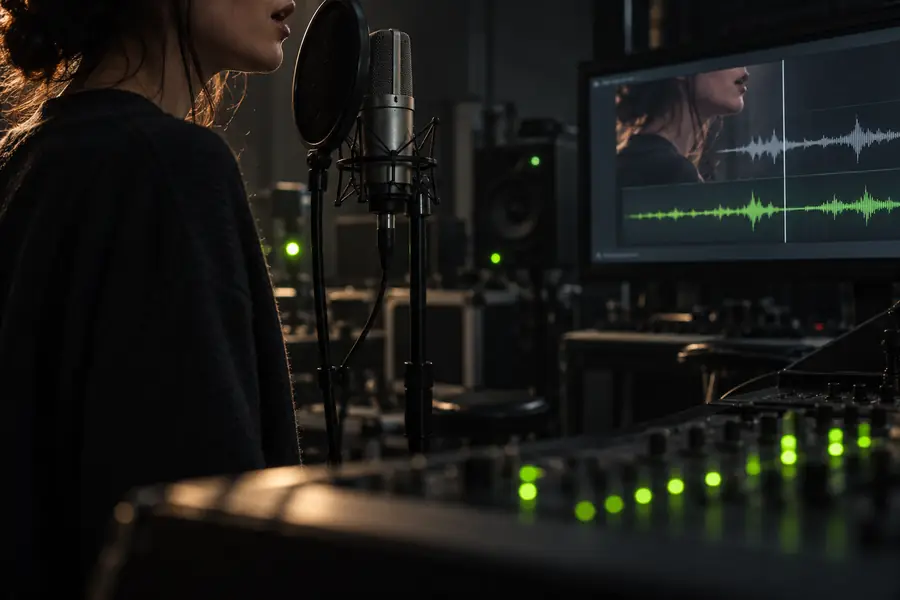
The goal is not perfect memorization. It is a repeatable relationship between phrase starts, mouth shapes, and expression.
Apply the method
Different performers need different anchors. Pick the case closest to your recording and use one supporting guide when you need a deeper workflow.
You need to record a trending audio quickly but only recognize the hook.
Mark the hook's entrances, practice one phrase at a time, and keep expression simple until the mouth timing is reliable.
how to lip syncYou know the mood but not every word in a scripted line.
Use captions for consonant landmarks, then rehearse the line in short fragments before adding gesture.
lip sync tutorial step by stepA character must follow unfamiliar dialogue without looking mechanically delayed.
Separate audio timing from facial acting, then check the first consonant and final mouth closure of every phrase.
How to fix lip sync issues?The beat is familiar but the vocal phrasing changes between sections.
Use rhythm as the base, identify held vowels, and rehearse transitions before recording the full take.
how to lip syncMake the next take
Bring the audio, choose a short section, and build a practice plan around beat marks, captions, mouth landmarks, and expression. The aim is a repeatable take that feels intentional even when the words are new.
Open VidioneTutorial FAQ
These answers focus on the practical question behind this guide: performing a lip sync when the words are unfamiliar.
Start by listening for the beat, phrase entrances, pauses, and held sounds rather than trying to memorize every syllable. Then use captions or a transcript to mark visible consonants and practice the audio in short fragments.
Yes, if your timing and visible mouth cues are consistent. Choose a clear emotional intention, follow the phrase structure, and avoid adding large expressions that compete with uncertain articulation.
Watch for stressed syllables, open vowels, sharp consonants, pauses, and the final closure of each phrase. These landmarks are more useful than trying to copy every tiny movement immediately.
Slower playback can help you separate fast syllables and identify where phrases begin and end. Return to normal speed before recording so the performance keeps the original rhythm and energy.