Social creators
A creator records a reaction, skit, or short performance over a selected audio track.
The mouth movement supports the joke, lyric, or point without requiring a live recording.
funny lip sync examplesDefinition guide
This page explains lip-sync concepts. The linked Vidione home page offers paid talking-avatar generation from a script, person portrait, and voice; enter those on Vidione after signing in. It does not promise source-video dubbing, singing videos, or reference-motion control. Browser timeline editing does not require a subscription, but AI generation does.
The lip sync meaning is simple: visible mouth movement is timed to spoken or sung audio so the person, character, or image appears to say those words. This guide separates the technique from dubbing, acting, and performance.
Related terms
These distinctions make the definition easier to apply when you are evaluating a video, animation, or generated performance.
Common mix-ups
Lip sync describes alignment, not the source of the voice or the quality of the performance. The same principle can be used with live footage, animation, a still image, or a generated character.
Accurate mouth timing cannot replace expression, posture, eye movement, or natural pauses. A technically aligned clip may still feel stiff or emotionally wrong.
WorkaroundReview the whole face and body, then adjust expression or performance separately.
Dubbing replaces or records dialogue for a different language or speaker. Lip sync is the alignment step that helps the visible mouth match the chosen audio.
WorkaroundTreat language adaptation, voice recording, and mouth alignment as separate production decisions.
Heavy background noise, unclear speech, extreme camera angles, covered mouths, or rapid cuts can make alignment unreliable.
WorkaroundUse a cleaner voice track, a clearer face angle, and shorter clips when possible.
A lip-synced performance may use prerecorded audio, edited dialogue, synthetic speech, or a voice recorded at another time.
WorkaroundCheck the production context instead of inferring authenticity from mouth movement alone.
The basic process
A useful definition has limits. Lip sync works best when the audio contains understandable speech and the visible subject has enough facial detail for timing cues to be recognized.
Start with speech or singing that has a clear rhythm, distinct syllables, and pauses that can be matched to visible movement.
The mouth opens, closes, rounds, stretches, and pauses in patterns that correspond broadly to the sounds being heard.
Watch and listen together. The result should feel coherent at normal viewing speed, even though it is not a literal display of every sound.
Side-by-side
Lip sync is a strong fit for matching visible speech to audio, but it is the wrong label when the main task is translation, voice replacement, or general video editing.
Lip sync
A different process
Lip sync
Align visible mouth movement with audio
A different process
Change, replace, or improve the audio itself
Lip sync
A visible speaker or character plus speech audio
A different process
A script, translation, voice track, or edited scene
Lip sync
A performance that appears to speak the selected words
A different process
A new voice recording, translated dialogue, or revised edit
Lip sync
Timing and visual plausibility
A different process
Language accuracy, vocal quality, or narrative editing
Lip sync
Recorded clips, avatars, animation, and portraits
A different process
Dubbing, subtitles, noise cleanup, or sound design
Lip sync
It cannot guarantee natural acting or truthful context
A different process
It may not preserve the original mouth performance
At a glance
Three practical numbers summarize the concept without turning it into a promise about a particular tool or output.
Where it appears
The definition stays the same across formats, while the production reason changes from one audience to another.
A creator records a reaction, skit, or short performance over a selected audio track.
The mouth movement supports the joke, lyric, or point without requiring a live recording.
funny lip sync examplesA character needs to speak dialogue that was recorded before the final facial animation was finished.
The animator can time mouth shapes and pauses around the established voice track.
lip sync for animationA presenter or edited clip needs speech alignment before it is placed in a longer channel video.
The spoken section feels connected to the on-screen face and is easier to follow.
lip sync for youtubeA still portrait or digital character is paired with a spoken message.
The static visual gains a speech-like performance while remaining dependent on the source image and audio.
lip sync photoVisual distinction
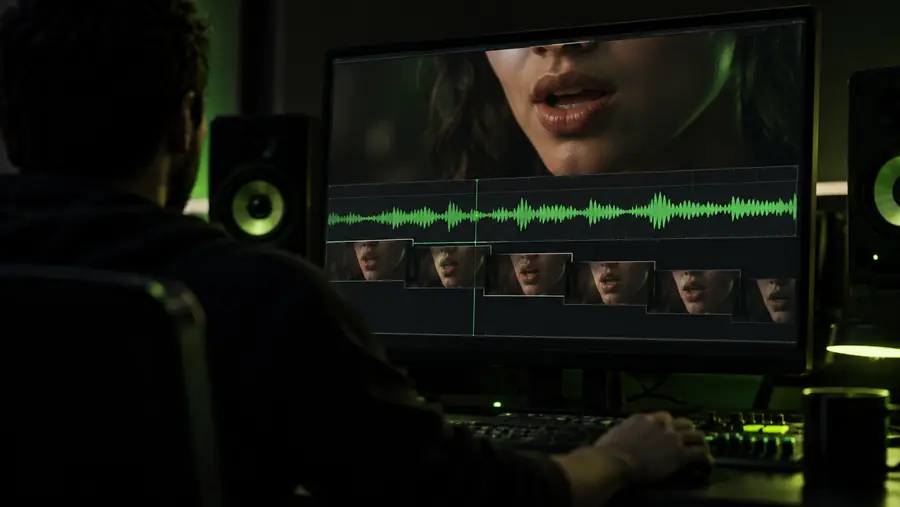
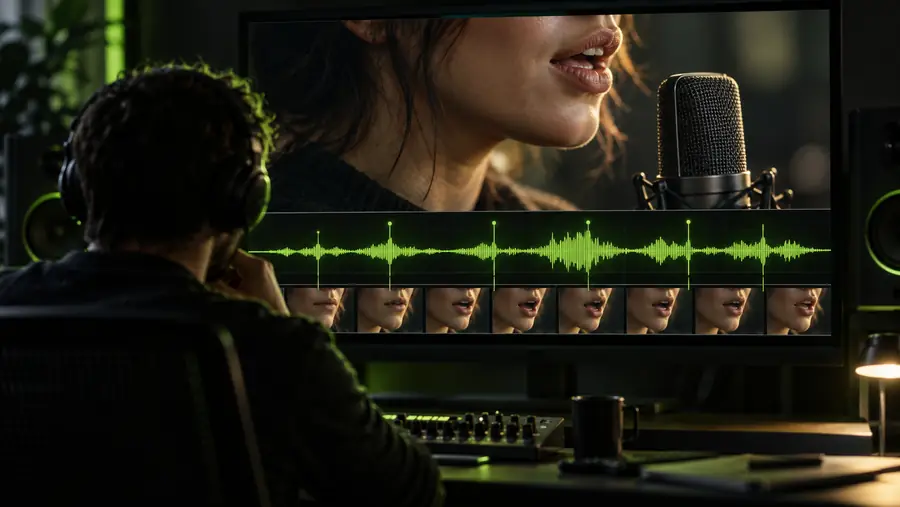
The difference is not that the person suddenly has a new identity; it is that the visible mouth movement is coordinated with the selected voice track.
The audio stays central; alignment changes the viewing impression.
Put it into practice
Now that the term is clear, use a suitable source image or video and a speech track with an obvious rhythm. The strongest result comes from treating lip sync as one part of a broader performance, not as proof of what happened during recording.
Open VidioneQuick answers
Lip sync means coordinating visible mouth movement with spoken or sung audio. The goal is for viewers to perceive that the person, character, or image is saying the words they hear.
No. Dubbing is the process of recording or replacing dialogue, often in another language. Lip sync is the alignment of visible mouth movement with whichever audio track is being used.
No. A performance can be lip-synced to prerecorded, edited, or generated audio. Mouth movement alone cannot establish when or how the voice was recorded.
Yes, a still portrait can be animated so its mouth appears to follow speech. The result depends on the image, the audio, and how much facial movement the chosen method can represent.