Pronunciation guide

A Clear Guide to Lip-Syncing Pronunciation

This page explains lip-sync concepts. The linked Vidione home page offers paid talking-avatar generation from a script, person portrait, and voice; enter those on Vidione after signing in. It does not promise source-video dubbing, singing videos, or reference-motion control. Browser timeline editing does not require a subscription, but AI generation does.

Lip-syncing pronunciation is easier when you separate the phrase into its meaning, rhythm, and grammar. This guide explains how to say it naturally and how the term developed from performance language into everyday creator vocabulary.

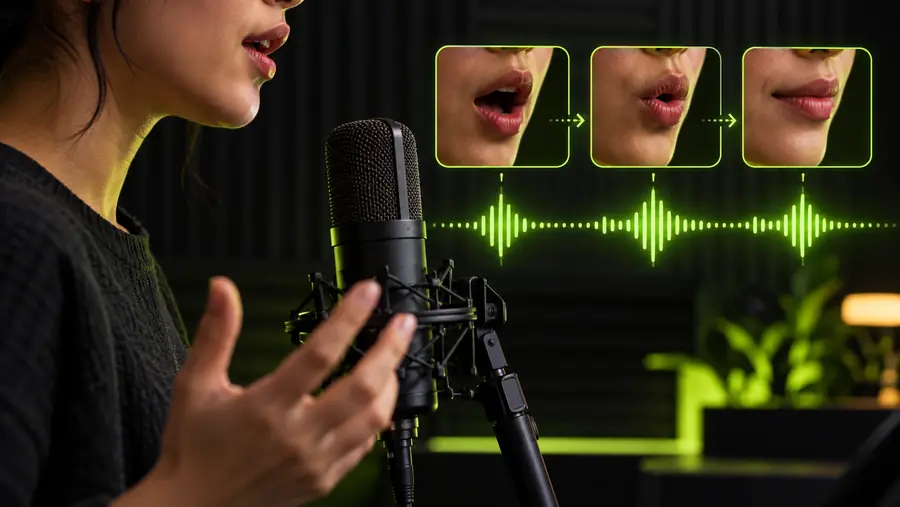
Illustrated guide to lip-syncing pronunciation

Related reading

These related guides explain the idea behind the words, not just the way they sound.

Useful limits

How It Used to Be Done

Pronunciation advice can clarify the phrase, but it cannot settle every accent or performance choice.

  • It cannot erase regional accents

    English speakers may give the vowel in lip a slightly different quality, and both careful and conversational accents can be understandable.

    WorkaroundAim for clear syllables and natural rhythm rather than copying one accent.

  • It cannot replace listening practice

    A written spelling shows the parts of the phrase, but it does not reproduce timing, stress, or connected speech.

    WorkaroundListen to several speakers and repeat the phrase at normal speed.

  • It cannot decide your grammatical use

    The phrase can describe a performance, a technique, or an action, so pronunciation alone does not explain the sentence around it.

    WorkaroundUse the surrounding words to identify whether lip sync is a noun or lip-syncing is a verb or modifier.

  • It cannot make every hyphen choice universal

    Editors vary between lip sync, lip-sync, and lip-syncing depending on grammatical role and house style.

    WorkaroundKeep the spelling consistent within a title, caption, script, or article.

Say it in sequence

How It Is Done Today

Use three small checks to make the phrase sound clear without making it stiff or over-enunciated.

  1. 1

    Separate the words

    Start with lip, then say syncing. The first word is short and crisp; the second carries the longer two-syllable movement.

  2. 2

    Keep the stress balanced

    Give lip a light first beat and let syncing remain prominent enough to be understood. Avoid stretching either word into a dramatic performance.

  3. 3

    Join it naturally

    In a sentence, connect the phrase at conversational speed. Say lip sync as two words, while lip-syncing flows as a compound modifier or action.

Visual check

What Changed

The written form changes with the job the phrase is doing, while the spoken core remains recognizable.

  • Compound form
  • Open phrase

Same idea, different grammatical shape.

Written lip-syncing form shown as a compound word
Lip sync phrase shown in a meaning-focused context

Quick facts

The Small Details That Matter

A few concrete language facts make the spelling and spoken rhythm easier to remember.

1 Lip sync is normally written as an open phrase when used as a noun.
2 words
2 Lip-syncing commonly uses a hyphen when it functions as a compound form.
1 hyphen
3 Lip-syncing is commonly counted as lip plus the two syllables in syncing.
3 syllables

At a glance

Who Switched

Compare the older performance expression with the modern digital usage that made the phrase familiar to a wider audience.

1

Core idea

Traditional performance usage

Mimic the words of a recording while performing for an audience.

Modern creator usage

Match visible mouth movement to audio in a video, animation, or digital presentation.

2

Typical setting

Traditional performance usage

Stage shows, television segments, concerts, and fan performances.

Modern creator usage

Short-form video, dubbed clips, avatars, animation, and social content.

3

Audio source

Traditional performance usage

Usually a known song, dialogue track, or broadcast recording.

Modern creator usage

A song, spoken recording, translated track, or generated voice track.

4

Main goal

Traditional performance usage

Create a convincing or entertaining performance.

Modern creator usage

Make the face, character, or presenter appear synchronized with the selected audio.

5

Common spelling

Traditional performance usage

Lip sync is often used as the noun for the act or performance.

Modern creator usage

Lip-syncing appears when the phrase describes the action or process.

6

Pronunciation priority

Traditional performance usage

Clear timing and expressive delivery matter most to the audience.

Modern creator usage

Clear timing still matters, with extra attention to how the mouth and audio align.

Where it appears

Who Switched

Different audiences use the same phrase for different reasons, from explaining a performance to preparing a finished clip.

Language learners

A learner encounters lip-syncing in a caption, tutorial, or creator brief and wants to say it without guessing at the hyphen.

They can distinguish the open noun phrase from the hyphenated action and use each confidently.

what does it mean to lip sync

Video creators

A creator describes a clip in which a person or character follows recorded dialogue or music.

They can choose accurate wording for a title, voiceover, caption, or production note.

lip sync meaning

Animation teams

An animator discusses mouth movement that follows dialogue in a character scene.

They can explain the process clearly before choosing timing, phoneme, or editing decisions.

how to lip sync

Teachers and presenters

An instructor introduces the term before discussing dubbing, performance, or synchronized speech.

They can model the phrase at a natural pace and explain why its spelling changes in context.

what does it mean to lip sync

Ready to create

Put Clear Lip Sync Into Practice

Once the phrase makes sense, the next step is applying it to a real clip, character, or presenter. Start with a short piece of audio and focus on a clean match between the visible mouth movement and the spoken or sung track.

Open Vidione
  • Use a clear audio reference
  • Check timing before adding effects
  • Keep the final wording natural

Your questions

Its Own FAQ

These answers focus on the pronunciation and spelling of lip-syncing, including the forms people most often encounter.

Say it as lip-sync-ing, with lip as one syllable and syncing as two. Keep the rhythm conversational rather than heavily stressing the hyphen.

Lip-syncing is commonly written as one hyphenated compound when it describes the action or works as a modifier. The noun phrase is usually written as two words: lip sync.

No. The hyphen is a writing mark, not a spoken sound. Say the words as a connected phrase without pausing to announce the punctuation.

Lip sync usually names the performance or technique, as in a lip sync. Lip-syncing describes the action, as in someone lip-syncing to a recording.

The phrase is usually spoken with clear emphasis on the main word beats rather than one extreme stress point. Keep lip short and let syncing remain easy to hear.

Start creating
Start creating